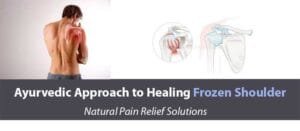

Shoulder pain is one of the most common complaints in most of the clinics, but not all shoulder pain is frozen shoulder. Knowing what you are dealing with helps you choose the right treatment and avoid losing precious weeks.
The key sign of frozen shoulder
Frozen shoulder, medically called adhesive capsulitis and in Ayurveda it is called Apabahuka, is defined by loss of movement, not just pain. Both you and someone else cannot lift your arm much, even with help. If another person can raise your arm higher than you can on your own, the problem is more likely muscle or tendon related. If it is stuck even when supported,then the joint capsule itself may be stiff.
Frozen shoulder vs rotator cuff problems
- Frozen shoulder: The stiffness spread in all directions, especially reaching behind the back or rotating the arm outward. Pain is often deep and worse at night than during the day.
- Rotator cuff injury: The pain with lifting the both arm or carrying weight, often with weakness. Movement may be fairly preserved when the arm is supported.
Frozen shoulder vs neck-related pain
Pain that travels from the neck into the shoulder and arm, with tingling or numbness in the fingers, may come from the cervical spine rather than the frozen shoulder . Conditions such as cervical spondylosis can look like Frozen shoulder.See our page on Ayurvedic treatment for spondylitis for more.

Frozen shoulder vs bursitis or tendinitis
Bursitis and tendinitis usually cause pain at a specific point of shoulder, often when raising the arms. Stiffness is not severe and does not usually progress over days or months.
Quick comparison
| Feature | Frozen shoulder | Rotator cuff | Neck-related |
| Main problem | Pain and stiffness | Pain and weakness | Radiating pain, tingling sensation |
| Movement when assisted | Limited movement | Often better | Usually normal |
| Night pain | Common | Common | It varies |
| Numbness in hand | Not often | Not often | Common |
The Ayurvedic view
According to Ayurveda shoulder pain has been explained in the form of doshas. Stiff, dry, painful movement points to aggravated Vata, while heaviness, swelling and a sticky stiffness suggest Kapha or Ama blocking Vata. A thorough consultation diagnoses which pattern is dominant, which guides the choice of medicated oils, panchakarma therapies and diet regimens. Learn more on our main page for Ayurvedic frozen shoulder treatment in Bhubaneswar.
When to see a doctor promptly
Get medical advice quickly if the pain follows a fall or injury, comes with chest pain or breathlessness, or the shoulder is inflammed. Shoulder pain on the left side with chest tightness can have a cardiac issue and needs urgent attention.
Takeaway
If your shoulder is painful and progressively stiff, especially with diabetes or thyroid issues, early evaluation matters. Ayurvedic treatment is most useful when started early, and it can work alongside with physiotherapy.
Struggling with shoulder pain or stiffness? Book a consultation at Srigram Ayurveda, N-1 A/5 IRC Village, Nayapalli, Bhubaneswar. Call 6360970492 (open 7:00 am – 9:00 pm, all days).
This article is for general information and does not replace medical advice. Please consult a qualified doctor for diagnosis and treatment, especially if you have diabetes, a recent injury, or severe or worsening pain.